Be yourself; Everyone else is already taken.
— Oscar Wilde.
This is the first post on my new blog. I’m just getting this new blog going, so stay tuned for more. Subscribe below to get notified when I post new updates.
Be yourself; Everyone else is already taken.
— Oscar Wilde.
This is the first post on my new blog. I’m just getting this new blog going, so stay tuned for more. Subscribe below to get notified when I post new updates.
Modi govt. cleverly used art 370 to remove special status. Article 35A has been scrapped by supersession of the 1954 presidential order and by applying all the provisions of the Constitution to the state of J&K.
The Shadow Constitution:
There is an Indian Constitution which is applicable on all over India & there is its shadow self which is applicable only& exclusively on Jammu &Kashmir. This Shadow self of constitution refers to Article 35A. Article 35A was inserted through a special Presidential order, neither debated in constituent assembly, nor approved by the parliament.
35A does not form part of the Indian constitution, but is part of Indian constitution as is applied to J&K.
Main Features of Article 35A
Hurdle in Removal of art 370:
Article 370 provides its removal itself. It states that President can take out Presidential order or notice if Constituent Assembly of J&K recommends. But there is a hindernce that the constituent assembly of J&K formed in 1956 no longer exist.
How art 370 removed:
The government has issued a Presidential notification scrapping Application to Jammu and Kashmir order, 1954, under which the Article 370 was introduced, and replaced it with ‘The Constitution (Application to Jammu and Kashmir) Order, 2019. The 1954 provision has been superseded.
Result of Removal of Article 370 and 35A :
Removal of J&K Constitution has brought the state under provisions of Article 1&2 and therefore, the center now has powers to change its boundaries.
In regards with that, Jammu Kashmir Reorganisation Bill, 2019 has been presented in the Rajya Sabha. It proposes to divide the state in 3 Union territories viz. Jammu, Kashmir & Ladakh.
My Opinion :
I really never had thought that this can be possible that article 370 will be scrapped from the Constitution. It is a very happy and cheerful moment for all the Indians including me. Thanks to Modi government who given this moment of happiness to all Indians.
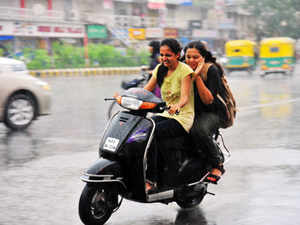
The Rajya Sabha on wednesday passed the Motor Vechicles Amendement Bill,2019.The bill contains provisions that will make Indian roads safer. The Bill was passed earlier in the Lok Sabha.
There were 108 votes for the passage of the Bill and 13 against it. The Bill was passed even as Deputy Chairman Harivansh overruled protest by opposition MPs against the running House beyond the stipulated deadline of 6pm.
1. Road Safety
The Bill proposes to increase penalties for traffic violations to act as a future deterrent. It proposes stricter provisions for offences such as drunken driving, juvenile driving, driving without licence, over-speeding, dangerous driving and overloading. It also proposes stricter provisions for driving without helmets. The bill also includes provisions for electronic detection of traffic violations. The penalty for motor vehicles is proposed to be increased by 10 percent every year.
2. Vehicle Fitness
The Bill includes a provision that mandates automated fitness testing for vehicles. This proposal would help reduce corruption in the transport department and improve road worthiness of the vehicle. The motor vehicles bill also proposes penalty for deliberate violation of safety and environmental regulations. The bill proposes regulation of the process of testing and certification of automobiles and it also proposes to bring agencies issuing automobile approvals to be brought under the Motor Vehicles Act, 1988 and vehicle testing stardards to be set. The bill also provides for mandatory recall of defective vehicles.
4. Road Safety Board
The Motor Vehicles (Amendment) Bill, 2019 provides for the setting up of a National Road Safety Board by the central government. The National Road Safety Board will be required to advise the central and state governments on all aspects of road safety and traffic management including registeration and licensing of vehicles, standards of motor vehicles, standards for road safety and promotion of new vehicle technology.
5. Protection of Good Samaritan
The bill incorporates Good Samaritan guidelines in order to help road accident victims. The Bill defines good samaritan as a person who provides emergency medical or non-medical assistance to a road accident victim and provides rules to prevent harassment of such a person.
Important Features of the Bill
• The Motor Vehicle (amendment) Bill 2019 amends the Motor Vehicles Act, 1988 to tackle issues like regulation of taxi aggregators, third party insurance and road safety.
• This Bill seeks maximum accountability for third party insurance in case of a vehicle accident at Rs 10 lakh in case of death and Rs. 5 Lakh in case of grievous injury.
• This bill also defines guidelines for cabs that will be finalized by central government.
• Motor Vehicle (amendment) Bill promotes the digitalization of some specific services. For example services like – Issue of licenses or permits, application filing procedure, receipt of money (such as fines), and change of address.
• The Bill authorized state governments to ensure the electronic monitoring and enforcement of road safety on national highways, state highways, and urban roads.
• The Bill also modifies the compensation and insurance provisions in case of motor vehicle accidents.
Importance of the Bill
Union Road Transport and Highways Minister Nitin Gadkari said in Lok Sabha that more than 1.50 lakh people die and 5 lakh people injured annually in road accidents. The amendment Bill proposes to exclude a clause of the Motor Vehicle Act to decide how to maintain their registers for driving licenses, to centralize vehicle registration data and achieve standardization.
Reasons of road accidents in India
The Standing Committee on Transport had observed that the majority of accidents being caused due to driver’s fault may be erroneous. Other reasons for road accidents include fault of drivers of other vehicles, defect in condition of motor vehicle, fault of pedestrian, weather conditions, faulty road engineering, etc.
Triple talaq is a form of islamic divorce practiced by Muslims. It allows any Muslim man to legally divorce his wife by stating the word talaq (the Arabic word for “divorce”) three times in oral, written, or more recently, electronic form.
On 22 August 2017, the Indian Supreme Court deemed instant triple talaq (talaq-e-biddah) unconstitutional. Three of the five judges in the panel concurred that the practice of triple talaq is unconstitutional. The remaining two declared the practice to be constitutional while simultaneously asking the government to ban the practice by enacting a law.

On Friday, a day after President Ram Nath Kovind signed on the The Muslim Women (Protection of Rights on Marriage) Bill 2019, making it into law, a Muslim relegious organisation —Samastha Kerela Jamiathul Ulema—moved the apex court against the legislation, claiming it violates the fundamental rights as enshrined in the constitution.
On the same day, advocate Shahid Ali challenged the law in Delhi High Court, calling it unconstitutional.
The Bill replaced the triple talaq ordinance formulated in 2018, and makes the declaration of triple talaq a cognizable offence, attracting up to three years imprisonment with a fine. An accused can be arrested without a warrant.
The relegious organisation has contended that the Act allows for penal actions against a specific class of persons based on their religion.
The petition also said that following the Shayara Bano case, the utterance of the word has been rendered useless, and questioned the logic behind the penal action against husband for the utterance of a meaningless word.
This Act action may lead to polarization and disharmony in society, the plea said, seeking direction to strike down the law while asking for a stay on its enforcement.
The petitioner also said the bill violates fundamental rights under Article 14, 15 and 21 of the constitution of India.
The plea filed in the Delhi High Court said the Act was not only against the fundamental rights enshrined in the constitution but also against the principle of natural justice and directive principles of state policy.
The petition filed in the high court questioned the absence of mechanism in place to test the veracity of complaints for pronouncing the word ‘talaq’ thrice.
The cases are most likely to be mentioned next week in the both the courts.
When the Bill was tabled in Parliament, leaders of the Congress, Samajwadi Party, the Dravida Munnetra Kazhagam (DMK) and the Rashtriya Janata Dal (RJD) had said the it was partisan, unconstitutional and arbitrary, while accusing the government of getting it passed through a “managed majority.”
The Narendra Modi government deserves credit for enacting a law to ban triple talaq. I am sure Modiji will now go down in history as a social reformer in the league of Raja Rammohan Roy and Ishwar Chandra Vidyasagar, who waged struggles to improve the lot of women. I think ‘achhe din aa gye’.

What is RTI?Right to Information Act 2005 mandates timely response to citizen requests for government information. It is an initiative taken by Department of Personnel and Training, Ministry of Personnel, Public Grievances and Pensions to provide a– RTI Portal Gateway to the citizens for quick search of information on the details of first Appellate Authorities,PIOs etc. amongst others, besides access to RTI related information / disclosures published on the web by various Public Authorities under the government of India as well as the State Governments .

This law was passed by Parliament on 15 June 2005 and came fully into force on 12 October 2005. Every day, over 4800 RTI applications are filed. In the first ten years of the commencement of the act over 17,500,000 applications had been filed.
The Act covers the whole of India except Jammu and Kashmir, where J&K Right To Information Act is in force. It covers all the constitutional authorities, including executive, legislature and judiciary; any institution or body established or constituted by an act of Parliament or a state legislature.
The Right to information in India has been mired with controversies ranging from their use in political battles, asking for educational degrees of political rivals, or cases of blatant refusals to provide information on high-profile projects to allegations of misuse by civil society.
What I have observed that, our honorable Prime Minister Sri Narendra Modi is known for his fearless and bold decision-making skill.These decision taken by him may seems to be bane initially turns out to be boon in the end. I can easily recall the Demonetization and GST where it seemed as I said bane initially,later out proved to be bane for India’s Economy .So, my opinion on this amendment will be that,we ,as a Responsible Citizen ,should “Wait and Watch”.There must be some logic behind this amendment.
India has one of the largest population of children in the world – Census data from 2011 shows that India has a population of 472 million children below the age of eighteen, of which 225 million are girls Protection of children by the state is guaranteed to Indian citizens by an expansive reading of Article 21 of the Indian constitution, and also mandated given India’s status as signatory to the UN convention on the right of the child. Child sexual abuse laws in India have been enacted as part of the nation’s child protection policies.The Parliament of India passed the ‘Protection of Children Against Sexual Offences Bill, 2011’ regarding child sexual abuse on 22 May 2012 into an Act.

Offences under the Act:
The new Act provides for a variety of offences under which an accused can be punished.
It recognises forms of penetration other than penile-vaginal penetration and criminalises acts of immodesty against children too. Offences under the act include:
It also provides for various procedural reforms,making the tiring process of trial in India considerably easier for children. The Act has been criticised as its provisions seem to criminalise consensual sexual intercourse between two people below the age of 18. The 2001 version of the Bill did not punish consensual sexual activity if one or both partners were above 16 years.
The Act defines a child as a person under the age of 18 years. However, this definition is a purely biological one, and doesn’t take into account people who live with intellectual and psycho-social disability.
My Opinion:
It is really a commendable step as it will generate fear of law in criminal’s mind.The crime against Children will decline subsequently which will lead to establishment of society’s peace and harmony.Children can live their life fearlessly,who are future of our country’s progress and development.
A milkmaid had been out to milk the cows and was returning from the field with the shining milk pail balanced nicely on her head. as she walked along ,her pretty head was busy with plans for the days to come.
“This good,rich milk,”she mused,”will give me plenty of cream to churn. The butter I make I will take to market , and with the money I get for it I will buy a lot of eggs for hatching. How nice it will be when they are all hatched and the yard is full of young chicks. Then when May day comes I will sell them , and with the money I’ll buy a lovely new dress to wear to the fair . All the young men will come and try to make love to me, but I shall very quickly send them about their business!”
As she thought of how she would settle that matter, she tossed her head scornfully and down fell the bucket of milk to the ground. And all the milk flowed out, and with it vanished butter and eggs and chicks and new dress and all the milkmaid’s dream.
(Don’t Count your chickens before they hatch.)
First of all I want to say something about law as a career. I think lawyer is very respected and money making job. This is quite an interesting subject to read. You will get to know about daily news and upto date to your society.
So I am coming to my answer that how I inspired to pursue law as career. There are many reason behid this. When I was in class IX, I was not having any dream about what to do. At that time my father shows and suggested his desire to my elder brother to become a lawyer. Then my brother tried it but in vain. Nature was granting anything big from him. So I took decision at that time that I will be a good lawyer one day.
After some time I got to know that in my village my family has some dispute with native on any matter. That’s why my father wants any member of my family to be lawyer. This dispute situation also enraged me and prompted me to choose law as a career . One more reason is that in my village almost all type of good job is there
7 but there is no any good lawyer. This fact I got to know from my grandfather. The story till then was upto class X when I was reading in DAV Ranchi.
I took admission in BD Public school, Patna in class XI. My brother gifted ‘Universal guide for CLAT’ book to me. Book was very thick and quite expensive also so I took interest and started solving legal aptitude portion. It was very nice portion and quite funny also. But due to burden of class XI syllabus I was going away from clat book. A few days later I stopped touching it. Now I was only focused on board and then board exam ended. Family members started asking what you will do now and also said you have the freedom to choose any career which you like. I was also feared that my english is not too much good then how should I think of law. I waited for board result and in that period I saw many movies and web series related to law, criminal, justice etc. These were the last thing which inspired me most.
So finally I decided and told my father about my career. He replied gently saying ‘If it is your decision it will always fruitful and I know your english is not excellent but think always that nothing is impossible if we keep trying it continuously’.
That’s how and why I decided to law as career.

Today I got an opportunity to know about each and every student of my class. This was a new excitement for me. First of all I got to know about my partner Pragya Sinha . She was like an open book, you can easily understand her. She was more or less like an extrovert guy. I loves to make new friend so it was like a good opportunity for me to know about everyone at a time. Earlier I hesitate to talk with girls but during this exercise I confronted girls closely. Knowing each and every person closely will help your brain work and respond faster.
Today exercise also taught that how different people with different field wants to achieve the same goal.
This is an example post, originally published as part of Blogging University. Enroll in one of our ten programs, and start your blog right.
You’re going to publish a post today. Don’t worry about how your blog looks. Don’t worry if you haven’t given it a name yet, or you’re feeling overwhelmed. Just click the “New Post” button, and tell us why you’re here.
Why do this?
The post can be short or long, a personal intro to your life or a bloggy mission statement, a manifesto for the future or a simple outline of your the types of things you hope to publish.
To help you get started, here are a few questions:
You’re not locked into any of this; one of the wonderful things about blogs is how they constantly evolve as we learn, grow, and interact with one another — but it’s good to know where and why you started, and articulating your goals may just give you a few other post ideas.
Can’t think how to get started? Just write the first thing that pops into your head. Anne Lamott, author of a book on writing we love, says that you need to give yourself permission to write a “crappy first draft”. Anne makes a great point — just start writing, and worry about editing it later.
When you’re ready to publish, give your post three to five tags that describe your blog’s focus — writing, photography, fiction, parenting, food, cars, movies, sports, whatever. These tags will help others who care about your topics find you in the Reader. Make sure one of the tags is “zerotohero,” so other new bloggers can find you, too.

 nandan's blog